- Just One More Thing
- Posts
- Frontispieces
Frontispieces
In which we discuss... Thomas Hobbes? Briefly, I swear.

Amy Coombe
September 03, 2025
Hello! I hope you’re all doing well. My neck of the woods went from hot and summery to INSTAFALL in about three seconds; genuinely, 31 August was lovely and warm and balmy and then 1 Septmber rolled in with a headcold, wearing five layers and a scarf. We’ve had some brief but alarmingly enthusiastic rain in the last three days, the horse chestnuts are dropping their conkers all over the place, the swifts have vanished from the sky (don’t worry; they’re just headed back to Africa for the winter) and I have bought all my favourite autumn candles from my favourite candle company. (This isn’t a paid plug, I just love them too much not to share.)
autumn
What should I mention first? Well, Barnes & Noble is running a preorder sale and you can preorder my book for 25% off for the next two days. Just enter PREORDER25 when you check out! I know I’m not the first person to say it (or the 77,000th) but preorders are HUGELY important for authors, especially debuts like mine, as they demonstrate to the publisher that folks are excited to read my book. And they’re one of the key ways to get a book onto a bestseller list! So please support your favourite authors by preordering when you can.
I know books are expensive - when I was in college and then grad school, I was living on such a limited budget that I could only treat myself to a new hardback a couple of times a year. (I sated my endless need for books with a library card and second-hand paperbacks.) And hardbacks are even more expensive now! So I will never, ever begrudge a reader waiting until the price goes down, or until they can score a second-hand copy of something they want to read, before buying a book. I still remember the first time I ever spent $50 - fifty entire dollars! - on a stack of only fun books for me. Not textbooks, not required reading, just a few new books I wanted to read, purely because they looked like fun. I wish I could remember what I actually bought, but I will never forget how awesome I felt taking that stack to the counter.
So, frontispieces. There may be a frontispiece in one of the editions of Stay For A Spell so I figured I’d do a little investigation into what a frontispiece is, and why they’re cool. Basically, a frontispiece is an illustraton at the beginning of the book, opposite the title page. They were very common in commerical publishing in the 19th and early 20th centuries; my beloved vintage Nancy Drew novels had them.
The term comes from architecture, and during the Renaissance, when first used, denoted the decorated front of a building. Publishing, of course, thought that was a great idea, and started decorating title pages, initially with achitectural elements such as pillars. Eventually, the decoration/illustration moved to the page opposite the title, becoming the frontispiece we know today.
If Stay For A Spell has a frontispiece, what might it be? Obviously I’d love something in line with the Nancy Drew style: a dramatic illustration of a scene from the novel with a compelling quote along the bottom, all “the killer has been hiding in the walls all this time!” There’s a part of me that would like to brief a scene and a line that’s not acutally in the book, but that would infuritate me as a reader, so I’ll spare you. If you’ve read the book’s description, you’ll know there’s a pirate in the novel; without spoiling much I can tell you that he’s deeply annoying to our protagonist, Tandy, and the frontispiece might illustrate the two of them squaring off over a pile of books.
But I also love the frontispieces that are a little less dramatic - frontispieces that show a scene, a house, a town.
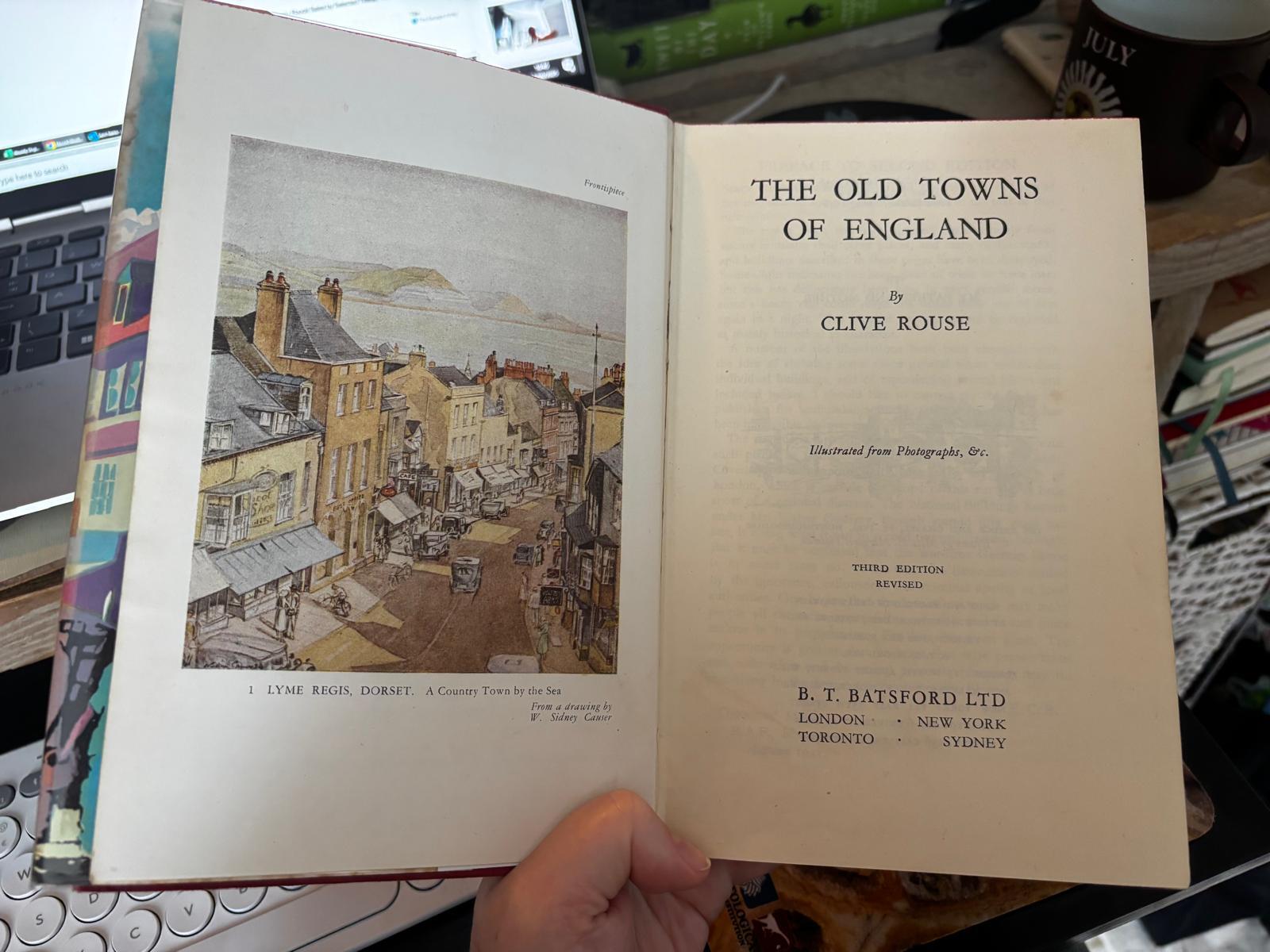
Above is an illustration of Broad Street in Lyme Regis from the gorgeous The Old Towns of Engand by Clive Rouse, published in 1936 by BT Batsford. So perhaps we’ll use an illustration of Little Pepperidge, with its pink and yellow buildings and devotion to terrible punning shop-names, as our frontispiece. We don’t know yet!
And I’ve seen visuals for the UK and the German covers! I will do a reveal as soon as I can…
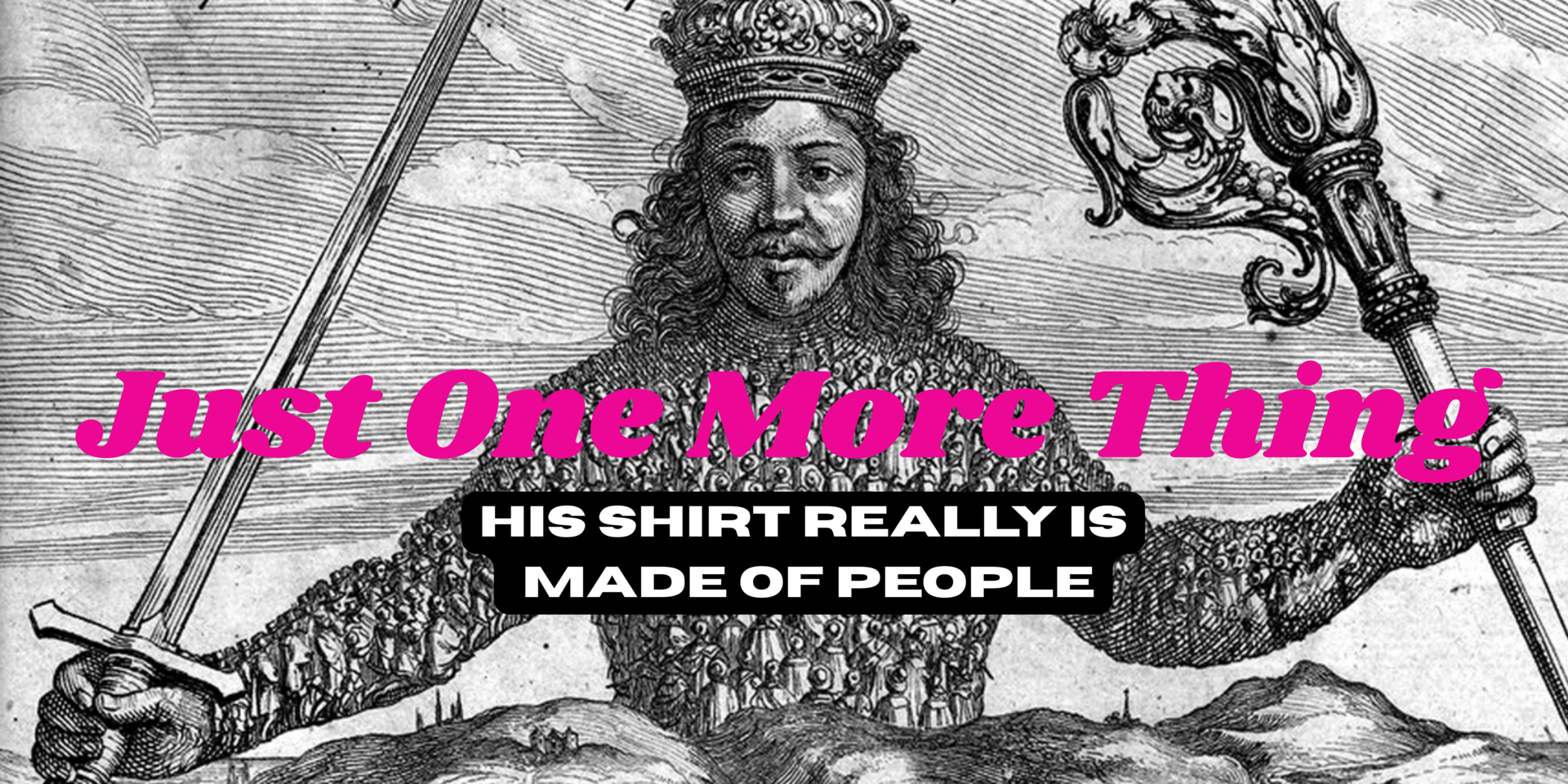
Oh, and just one more thing: the frontispiece is considered a type of “paratext” - elements of a book which mediate the relationship between book and reader. An author’s note or foreward is fairly common even today, but paratexts can include annotations, notes to the reader, illustrations and, yes, frontispieces to help them interpret the book - such as the “leviathan” frontispiece from Thomas Hobbes’ Leviathan (yes, the famous image of the guy wearing a shirt made of people, waving a sword and a torch over the countryside that you’re picturing right now because it was on the cover of the copy you read in college.)
‘Til next time, friends!
Amy x